
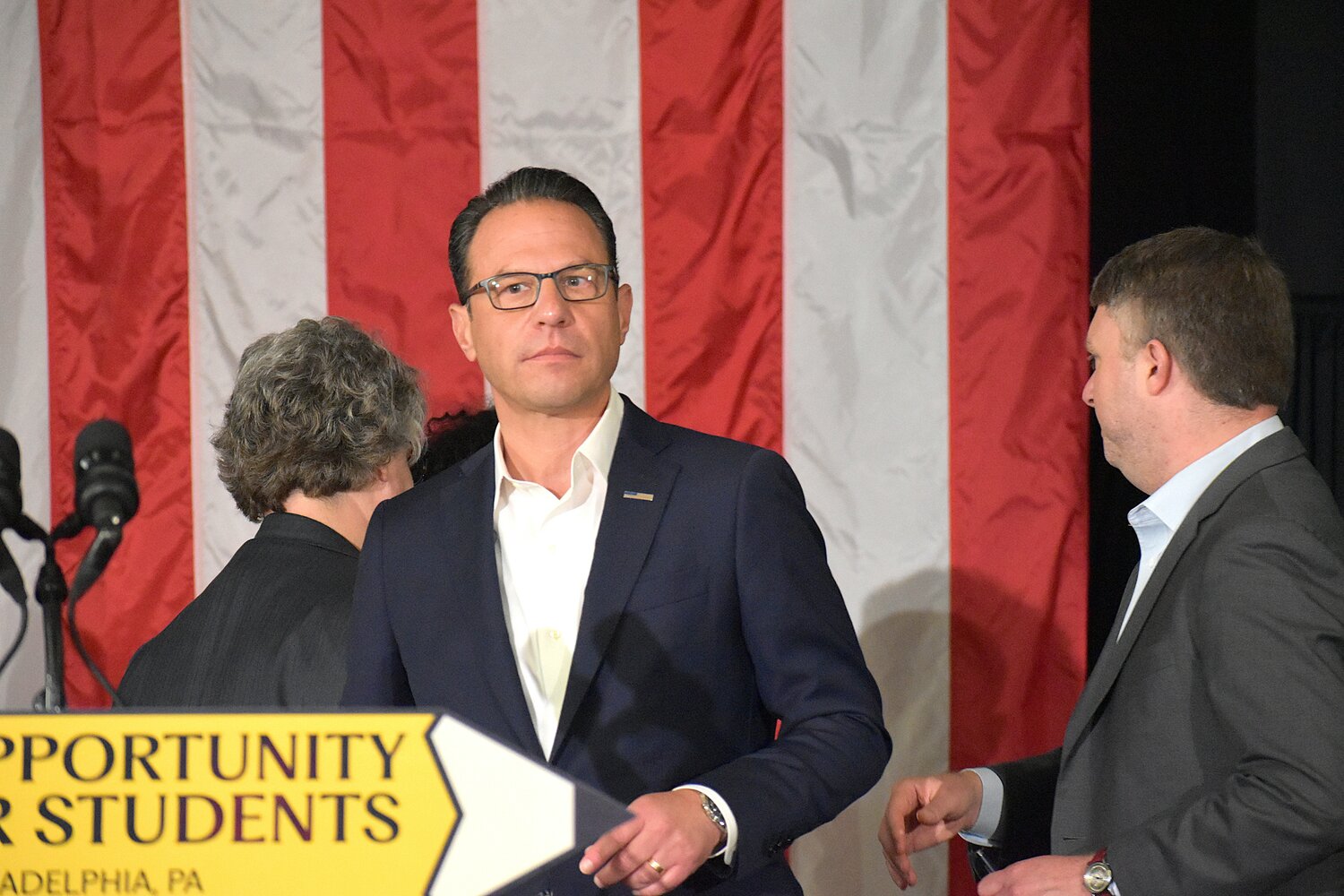
School choice advocates are pushing Gov. Josh Shapiro to opt into an education tax credit program that could provide hundreds of millions of dollars in scholarships to students across Pennsylvania.
The federal initiative “represents a once-in-a-generation opportunity to expand educational access and bring new privately funded resources to K-12 students,” said Anne Lesser, president and CEO of the Invest in Education Coalition, an organization that supports the credit program and held a news conference Thursday in Philadelphia.
Starting in 2027, individuals will receive a tax credit from the Internal Revenue Service equal to the amount they donate to a scholarship organization in a participating state. The maximum benefit is $1,700 for a single person and $3,400 for a married couple.
Those organizations will then award funds to students for tuition, fees and other education-related expenses. Any family with a household income under 300% of the area median, based on family size, is eligible, meaning that the overwhelming majority of parents would be able to apply for the scholarships.
President Donald Trump’s administration released regulations for the Federal Scholarship Tax Credit Program, also known as the Education Freedom Tax Credit, on Oct 1.
Governors need to opt in for their state to participate, and, so far, 31 have, including Democrats Kathy Hochul of New York and Jared Polis of Colorado.
Shapiro has yet to make a decision. During an Oct. 7 gubernatorial debate, he said he is “very open” to the concept and expects an announcement in the “next few weeks.”
“I tasked my agencies with determining how this would work in Pennsylvania under those federal requirements,” Shapiro added. “I believe in giving parents an opportunity to put their kids in the best position for them to succeed.”
His GOP challenger in next month’s general election, State Treasurer Stacy Garrity, said she would enroll the commonwealth on “day one” of her administration.
Pennsylvania has until the end of the year to opt in to the program, but organizations that award scholarships under the state’s existing educational tax credits (EITC and OSTC) hope Harrisburg acts as soon as possible.
“Scholarship organizations, like (the Children’s Scholarship Fund Philadelphia), want to be ready to start implementing this program on Jan. 1,” Keisha Jordan, the fund’s president and CEO, said. “The sooner we have confirmation that we’re opted in, the better we can be prepared to serve students.”
If Shapiro declines to participate, Pennsylvanians could still claim the tax credit, but they would have to send money to out-of-state scholarship organizations, supporters noted.
The IRS and U.S. Department of the Treasury estimate that, by 2030, the program could be providing $26 billion worth of scholarships to between 2 and 5 million students.
“Education freedom is the key to unlocking opportunity and success for our next generation of students,” U.S. Secretary of Education Linda McMahon said in a statement earlier this month. “The Education Freedom Tax Credit, the largest expansion of school choice in history, will supercharge those opportunities for millions of children.”
Opponents of the tax credit argue that it funnels government money to private schools, most of which are religious, and contributes to enrollment declines in public schools, thereby weakening the districts.
Though dollars from similar programs are most often applied to tuition, funding from this tax credit could also be used to cover tutoring, afterschool programming and other services for children enrolled in public schools, the program’s boosters noted.
State Sen. Anthony H. Williams, a Democrat who has supported the expansion of charter schools and the state-based tax credits, said he has “gone past the period of being angry to simply confused.” He encouraged Shapiro to opt into the federal program “without delay.”
“What frustrates me the most is that it has to turn into some political rhetoric – Democrat, Republican, moderate, conservative, progressive,” added Williams, who represents parts of South, Southwest and West Philadelphia, along with a section of Delaware County. “It has nothing to do with that.”
MORE: Shapiro announces $837M Port of Philadelphia expansion


